
Pickerington, OH · Garage Door Service
Why a Garage Door Jumps the Track Around Pickerington
Pickerington homes built mostly in the 1960s-70s and later have track and hardware wear from cold swings. Here's why doors jump track and what to check first.
- Repairs & new doors
- Springs & openers
- Serving 4 nearby communities
What Most People Get Wrong
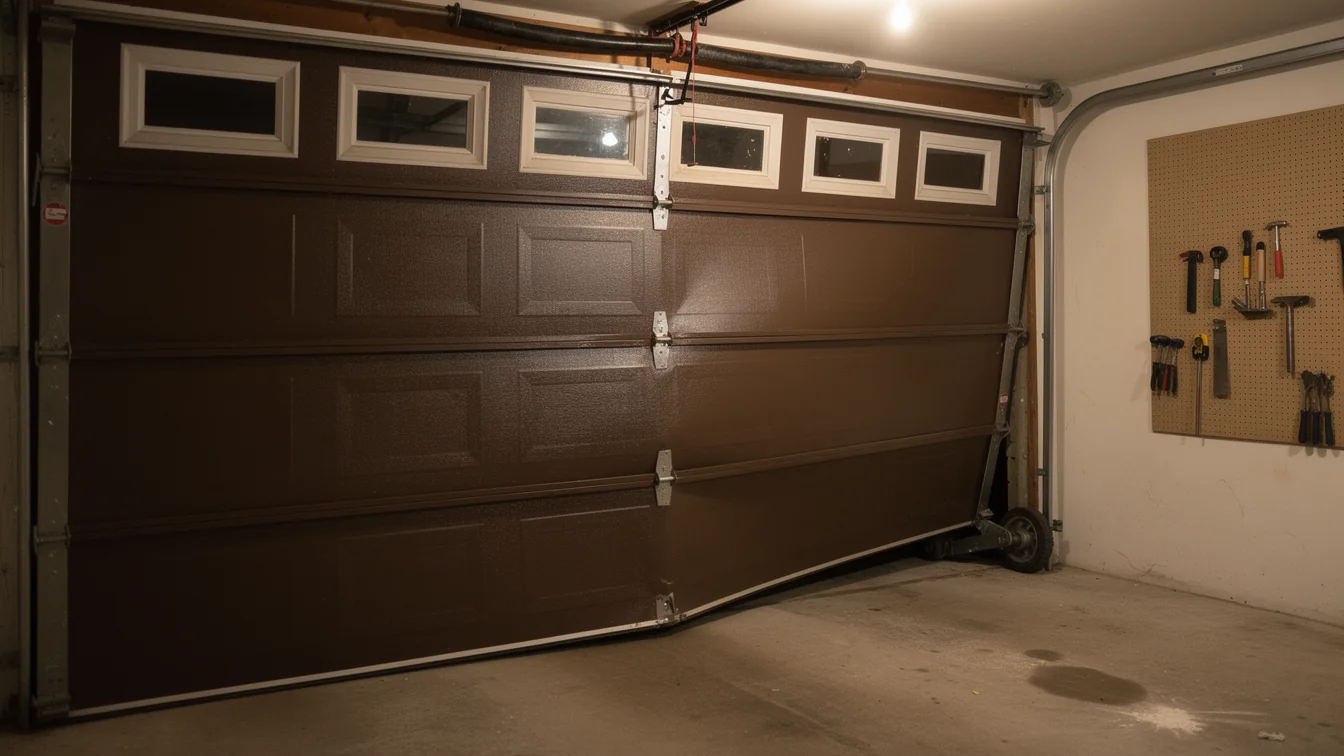
Most homeowners figure a door comes off track because a roller broke or somebody backed into it. Around here, that's rarely the real start of the problem. Housing stock in this service area runs 1938 to 2006, with the median build year sitting at 1977, and a lot of what we see is original or near-original track hardware on houses from that run. The brackets that hold the track to the jamb loosen over decades of the door cycling twice a day. Nobody notices until the day the door binds on one side and the rollers walk out of the channel.
The second wrong assumption is that a bent track means a new door. A section of track is cheap and bolts on in under an hour in most cases. What costs money is when a door has been running off-track long enough that the rollers chewed up the track lip, or a panel got racked trying to travel on a bad line. By the time you hear grinding instead of a smooth roll, the fix has moved from a track swap to a bigger job. Catching it at the first hesitation, before the door fully derails, is the difference between a quick repair and replacing hardware across the whole opening.
The Seasonal Bit
This area sits in a severe cold climate band, and that matters more to a garage door than most people expect. Steel track and steel rollers contract in cold weather. Over a winter, the gap between a loose bracket and a tight one widens every time the temperature swings. A track that was marginal in October can be out of alignment by February, and the door starts dragging on one side before it ever jumps the rail.
Lubricant matters here too. Grease that's fine in July stiffens up in a cold garage, and a roller that doesn't spin freely starts skipping in the track instead of rolling through it. That skip is often the actual mechanical event that knocks a door off line, not a single dramatic impact. If your door has started making a new noise since the weather turned, that's usually the track and rollers telling you they're fighting the cold, not a sign the opener is failing.
The Situation
Across the areas this shop covers - Canal Winchester, Blacklick Estates, Winchester, South Columbus, and the rest out to Worthington and Heath - the bulk of the housing is 1960s-70s stock, with pockets built later toward the 2006 end of F1's range. Older sections tend to have the original track brackets fastened straight to wood jamb trim that's shrunk and shifted with 50-plus years of seasonal movement. Newer builds in the same towns usually have better-anchored track, but the door hardware itself is often the builder-grade minimum, which wears out its rollers faster than heavier-duty parts would.
That split matters for diagnosis. A 1970s house with a door that's suddenly off track is probably a bracket or jamb issue. A 2000s house with the same symptom is more likely a worn roller or a spring that's lost tension and is letting the door hang unevenly on the track. Knowing roughly when a house was built tells us where to look first, which saves a trip charge on the small jobs and gets ahead of the bigger ones.
What the Weather Here Does to It
Severe cold does three specific things to a garage door track system. It shrinks steel track sections slightly, which can open small gaps at the splice joints. It stiffens lubricant on rollers and hinges, making them catch instead of glide. And it makes torsion springs lose a bit of lift on the coldest days, which throws off the balance that keeps a door tracking straight as it travels. Any one of those on its own is a minor annoyance. Together, over a few winters, they're what actually walks a door off its rail.
I'll be straight about the limitation here: I can't tell you from a fact sheet whether your specific track is loose, your rollers are worn, or your spring has lost tension. Those are a hands-on call. What I can tell you is that if your house falls in that 1960s-70s band common to this area, or even the newer end built up through the mid-2000s, winter is when a marginal track setup finally fails. If the door's been catching since the cold set in, don't keep running the opener through it - that's how a bracket issue turns into a bent track and a cracked panel.
Frequently asked questions
Why did my garage door suddenly come off the track this winter?
Cold weather shrinks steel track slightly and stiffens roller lubricant, so a door that was already running on a loose bracket or worn roller is more likely to catch and jump the rail once temperatures drop into the severe cold range this area sees every winter.
Is an off-track door always a full replacement?
No. Most of the time it's a bracket, a section of track, or a worn roller, all of which are repairable. Replacement becomes the right call when the door has run off-track long enough to bend a panel or chew up the track lip badly.
Does the age of my house matter for this kind of repair?
Yes. Housing in this area runs from the late 1930s up through the mid-2000s, with most built in the 1960s-70s. Older homes more often have jamb-mounted brackets that have loosened over decades; newer homes more often have worn builder-grade rollers or hardware.
Can I push a door back onto the track myself?
I'd rather you didn't. A door under spring tension that's off track can come down fast if you force it, and forcing bent track back into shape usually makes the eventual repair bigger and more expensive.
Related garage door services in Pickerington
More garage door guides
Book garage door service in Pickerington
Call now or request a quote - tell us what the door is doing and where you are.