Pickerington, OH · Garage Door Service
Is Your Pickerington Garage Door Too Old to Fix?
Pickerington homeowners ask whether a decades-old garage door is worth repairing. Here's how the town's housing stock and cold winters decide the answer.
- Repairs & new doors
- Springs & openers
- Serving 4 nearby communities
What Most People Get Wrong
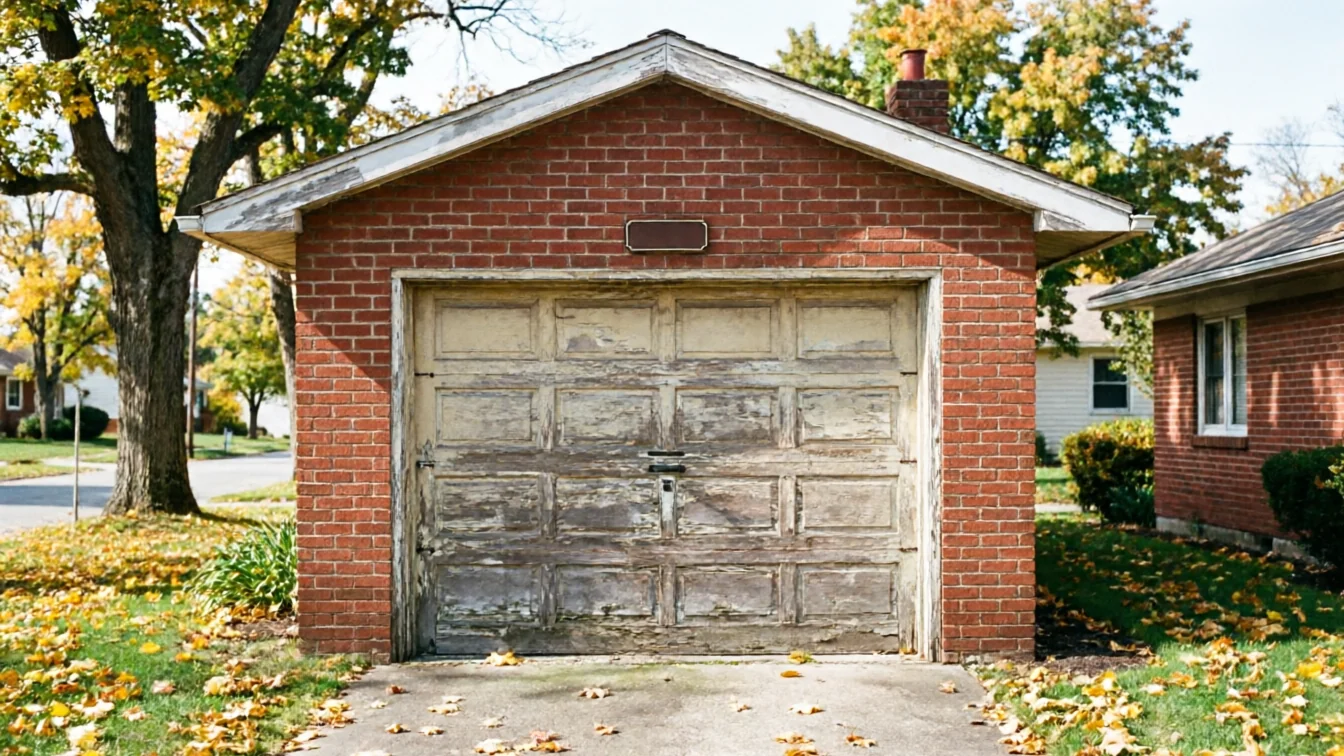
Most people in Pickerington assume that because their garage door is old, it should be replaced outright. That's not always true, and it's not always false either - it depends on when the house went up. Houses in this part of the county were built anywhere from 1938 to 2006, with the median build year sitting at 1977. A door installed when a 1977 house was new is a different animal from one in a house finished in the early 2000s. The 1970s builds you see across the named neighborhoods that make up this area typically carry steel sectional doors with extension or early torsion spring setups - hardware that's mechanically sound if it's been serviced, but that uses parts manufacturers don't always stock new. The mistake is treating 'old' as one category. A 45-year-old door with a worn torsion spring and dry rollers is a repair. A 45-year-old door with a rusted-through bottom panel and a frame that's shifted is not. Age alone doesn't tell you which one you've got.
The Seasonal Bit
Cold hits this area hard enough that it changes how a garage door behaves, not just how it looks. Steel contracts in low temperatures, which tightens tolerances on tracks and rollers that were already worn loose from decades of summer heat and winter cold cycling. If your door is from the 1960s-70s stock that makes up most of the housing here, the spring has already been through decades of that expansion and contraction. That's the real seasonal failure point - not a sudden break, but a slow loss of tension that shows up as a door that struggles to lift in January and seems fine again by April. We check spring tension and track alignment before the cold sets in, because waiting until the door won't open at 6 a.m. in freezing weather is the expensive way to find out. One thing we don't do: lubricate a door and call it done when it's showing cable fray or a cracked panel. That's a repair call, not a seasonal tune-up, and treating it as one just delays the real problem.
The Situation
Across the households we serve, roughly two-thirds of homes are owner-occupied - 32,679 of the roughly 55,641 households in the area - and median household income runs around $92,335. That matters for the repair-versus-replace math. Owners who plan to stay put for another decade usually come out ahead repairing a structurally sound door even if it's inefficient, because the labor and parts cost on a spring, cable, or opener repair is a fraction of a full replacement. Owners weighing a sale lean the other way, since a new door is one of the few upgrades that shows up clearly on a listing. Neither choice is wrong. What we won't do is talk a homeowner with a sound 1980s door into replacing it just because it's not insulated to current standards - if the panels are straight, the spring holds tension, and the opener runs quiet, that door has years left in it regardless of what year it is.
What the Weather Here Does to It
This area sits in a climate zone the building codes classify as cold and severe, which is a bigger deal for a garage door than most people think. A single steel panel without insulation loses heat fast, and in a severe winter that shows up as a garage that's noticeably colder than it should be, condensation on the inside of the door, and springs that work harder to lift steel that's stiffened in the cold. Doors built before double-wall insulated steel became standard - common in the 1970s housing stock that dominates this area - were never designed for this. If you're deciding whether a door earns a repair or a replacement, the cold climate rating here pushes the answer toward replacement sooner than it would in a milder region, especially for single-wall doors with no thermal break. A repair extends the life of a sound door. It doesn't change what the steel is or isn't built to handle once the temperature drops.
Frequently asked questions
My garage door is from the 1970s. Is it worth fixing or should I replace it?
Depends on what's actually wrong. Housing in this area runs from 1938 to 2006, median 1977, so a lot of doors are that age. If the panels are straight and the spring and cable just need servicing, repair it. If the panel is rusted through or the frame has shifted, that's a replacement, not a repair.
Why does my garage door get harder to open in cold weather?
This area sits in a cold, severe climate band, and steel contracts in low temperatures, tightening tolerances on tracks and rollers. On an older spring that's already lost some tension from decades of seasonal cycling, that extra resistance is enough to make the door noticeably harder to lift in winter.
Should I insulate an old uninsulated garage door instead of replacing it?
You usually can't retrofit real insulation into a single-wall steel door the way a double-wall door has it built in. Given how cold it gets here, if the door is already due for other work, replacing it with an insulated double-wall door is often the better move than patching an uninsulated one.
Related garage door services in Pickerington
More garage door guides
Book garage door service in Pickerington
Call now or request a quote - tell us what the door is doing and where you are.